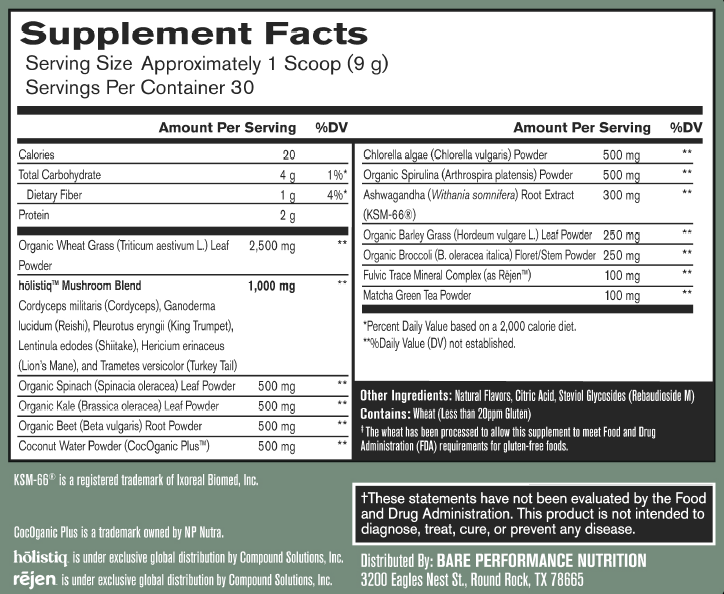
Two panels, with different nutrient amounts
The manufacturer-hosted Lemon gallery image identifies approximately one 7.6g scoop and 30 servings. It lists 25 calories, 5g carbohydrate, 3g dietary fiber, and 1g protein. It also lists a 2,500mg Green Balance blend, additional wheatgrass, coconut water powder, and 300mg KSM-66 ashwagandha root extract, among other ingredients.
The Lemon label linked from NSF's directory instead identifies approximately one 9g scoop and 30 servings, with 20 calories, 4g carbohydrate, 1g fiber, and 2g protein. It includes a 1,000mg mushroom blend, individual plant ingredients, a mineral complex, and 100mg matcha green tea powder. These are material differences, not alternative ways of rounding the same fiber figure.
The current front-container render shows 270g and 30 servings, consistent arithmetically with the directory's 9g serving. That supports asking about the 9g version, but it does not prove which lot would be delivered. Ask BPN for the complete label and lot information for current Lemon inventory. Our serving-size guide explains why the scoop and blend total must stay attached to the correct record.
Keep ingredient benefits separate from this blend
BPN promotes digestion, natural energy, mood, and immune support. Those are manufacturer claims, not outcomes measured by this publication. The ingredient discussion alone does not show that every benefit was demonstrated in the exact currently supplied Lemon formula.
Both inspected panels name 300mg ashwagandha extract, while other ingredients differ. Evidence about a particular extract does not automatically establish the effects of a finished greens drink. The ashwagandha guide covers preparation-specific evidence and precautions; NCCIH advises against use during pregnancy and breastfeeding and identifies other suitability concerns.
The 9g directory panel names matcha but does not state a caffeine quantity. We do not convert the weight of matcha into milligrams of caffeine or call the formula caffeine-free. Anyone who needs that information should request a formula-specific answer before ordering.
Gluten-free wording is not a wheat-free statement
The gallery panel says it contains wheat and coconut and includes a processing explanation alongside its gluten-free claim. The directory panel also identifies wheat and says less than 20ppm gluten. Its ingredient list still names coconut water powder even though the displayed allergen wording differs.
These records need to remain distinct. A gluten statement answers a different question from whether a wheat ingredient is present, and the absence of a particular allergen phrase does not erase an ingredient from the list. Someone managing an allergy should bring the exact current panel to the relevant professional rather than rely on the product's front-page badge.
The other ingredients on both inspected panels include natural flavors, citric acid, and steviol glycosides. That sweetener wording is not the same as listing sorbitol or another sugar alcohol; see our sweetener guide for the distinction.
What the NSF record establishes
We located a United States NSF directory entry specifically titled Strong Greens Lemon. It identifies a 270g package, a 9g scoop, and named lots. The record's flavor field says “Other” despite Lemon appearing in the title. We preserve that mismatch rather than using the field as proof about every flavor.
NSF's program explanation describes testing and certification scope, including label-content and contaminant checks. That is useful independent program evidence. It is not a clinical trial demonstrating improved digestion or mood, and this review has not matched a purchased tub to one of the listed lots.
The BPN page also displayed a Light Labs testing widget dated December 2025. We did not verify a complete underlying report tied to current inventory. A separate California lead warning appears on the seller's page and remains relevant to the product record. Neither a testing badge nor the warning alone supplies an exposure calculation for an individual reader.
The selected offer and its conditions
The rendered Lemon page showed $44.99 for a one-time purchase and $33.74 with a 25% subscription discount. The default recurring selection displayed every 30 days, with other intervals available. The selected page offered Add to Cart, and the official product catalog marked Lemon available; an extraction's notification text was not used to claim it was out of stock.
With either inspected panel's 30 servings, simple arithmetic gives about $1.50 per labeled serving at the one-time figure or $1.12 at the displayed subscription figure. These calculations exclude tax, shipping, and any checkout change. The site's free US shipping threshold was $99, so a single $44.99 jar should not be described as a verified free-shipping order.
Posted subscription terms allow changes subject to timing conditions and explain that a current shipment cannot be cancelled once shipping confirmation has been sent. The return policy gives 30 days from fulfillment and makes opened supplements eligible only for store credit. We did not test cancellation, fulfillment, or returns. The subscription guide explains what to retain before payment.
A useful reason to pause the comparison
Strong Greens offers more information than a front-label plant list, including an independently located certification record. Yet the conflicting panels make the exact version a necessary pre-purchase question. Our buying-note tool keeps that discrepancy with the saved record instead of selecting whichever fiber number looks more attractive.
A targeted FDA recall search did not identify a matching Strong Greens notice during this review; that limited result is not proof of safety. Keep the supplied package details and check current official notices when relevant. Compare the record with CoreAge Rx Green Scene and other powders only after separating formula identity, commercial terms, quality evidence, and health claims. They are all useful questions, and none should be answered on behalf of the others.